Since shortly after 1859, oil has been subject to attempts to control its price, or should I say the price of its refined product, be that kerosene for lighting or, later, gasoline for autos. The first one to try was John D Rockefeller with his development of the Standard Oil Trust in the 1860s and… Continue reading The Global Implications of Oil Price Renormalization (Part 2)
Category: Writing
The Global Implications of Oil Price Renormalization (Part 1)
First, we have to understand some of the history and makeup of the commodity. In North America, from time immemorial, the Indians in the Western Allegheny area had skimmed oil seepage off the surface of the water and used it as a medicine. The settlers called it ‘Seneca oil’ after the local tribe and used… Continue reading The Global Implications of Oil Price Renormalization (Part 1)
Democratizing Education
Lawrence Cremin notes that humans receive knowledge about their environment, the world about them, in five main ways. First is through the home, as babies turn into children and then into youths. Until recently, this was probably the sole method of education for most humans. They learned informally from relatives, friends, and others nearby. A… Continue reading Democratizing Education
A Petroleum Strike Might Have Saved Lincoln
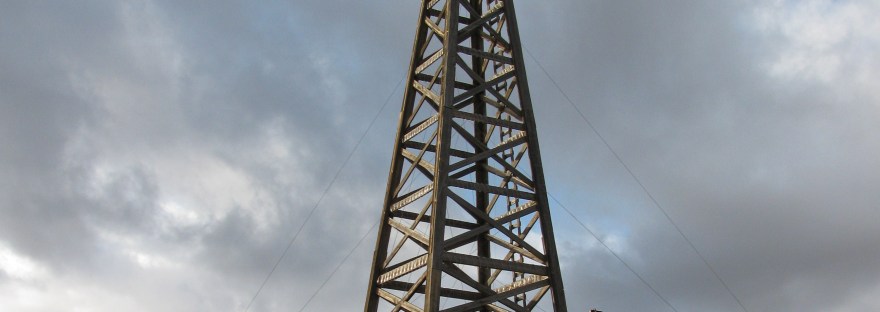
Almost 158 years ago, on the evening of April 14, 1865, President Abraham Lincoln was assassinated by John Wilkes Booth, as he watched a play. It could have been different. In March of 1858, the Pennsylvania Rock Oil Company was reorganized as the Seneca Oil Company, with New Haven CT banker James Townsend becoming President… Continue reading A Petroleum Strike Might Have Saved Lincoln
Aging and Economies
It’s really pretty simple. In order for a society to reproduce itself, each woman must have 2.1 children during her fertile period, which normally lasts from, say 14-42 years of age, more or less. This is called a fertility rate, as opposed to a birthrate. A stable population fertility rate is reached by counting one… Continue reading Aging and Economies
Just Bubbling Along
In essence, the bubble problem is tied to borrowing, that is, to put it [more or less] in the words of a character in the movie Popeye, "If you lend me money for a hamburger today, I’ll pay you back on Monday". Presumably, there would be an extra charge for taking the risk, called interest.… Continue reading Just Bubbling Along

About Uncle Sam
There is a famous Army recruiting poster from World War I that shows Uncle Sam in his current ‘look’. He is sternly looking and pointing at the viewer, and the caption below him reads “I Want You For U.S. Army!” Generally, all the representations of Uncle Sam since 1917, and including the one my son… Continue reading About Uncle Sam
‘I Stole It Fair and Square’
I have sometimes used this quip in the above title to describe what went on in much of the American land policy with respect to Native Americans. An awful lot of land was acquired from various ‘chiefs’ who were deemed by the American authorities to have had the legal right to sell property presumably owned… Continue reading ‘I Stole It Fair and Square’
Boundaries
You might want to follow this explanation on a map. How US 20 (America's longest highway and the subject of my book trilogy The Yankee Road) ended in Newport, or even at Yellowstone, is a complex story. First and foremost, it begins with boundaries. After the American Revolution, the British kept control over the eastern seaboard… Continue reading Boundaries
Some Rough Travel Comparisons
Something that seems to be left out of most accounts of travelling overland across the continent is how long it took, especially for those going west from the Mississippi River valley, and what the introduction of the railroad and then the automobile meant to the traveller. For the wagon going to Oregon, or the Mormon… Continue reading Some Rough Travel Comparisons
 Old Professor by the Sea